Planning & Optimization Module
Optimal route planning, visualization tools, and real-time adjustments.

Optimal Route Planning, Automated and Easily Customizable

Apply advanced cloud-based, enterprise-level, dynamic multi-day route planning and scheduling for primary, secondary, and service-based fleets.

Handle complex constraints of virtually any type of industry’s routing problems while dealing with increasing demands of customers for precisely-timed deliveries.

Complete delivery, collection, and service tasks using less time, miles, trucks, and drivers, without sacrificing performance and customer satisfaction.
Efficiency and Adaptability for Your Logistics Planning
Bring precision to your logistics planning and drive performance and optimization, regardless of mode.
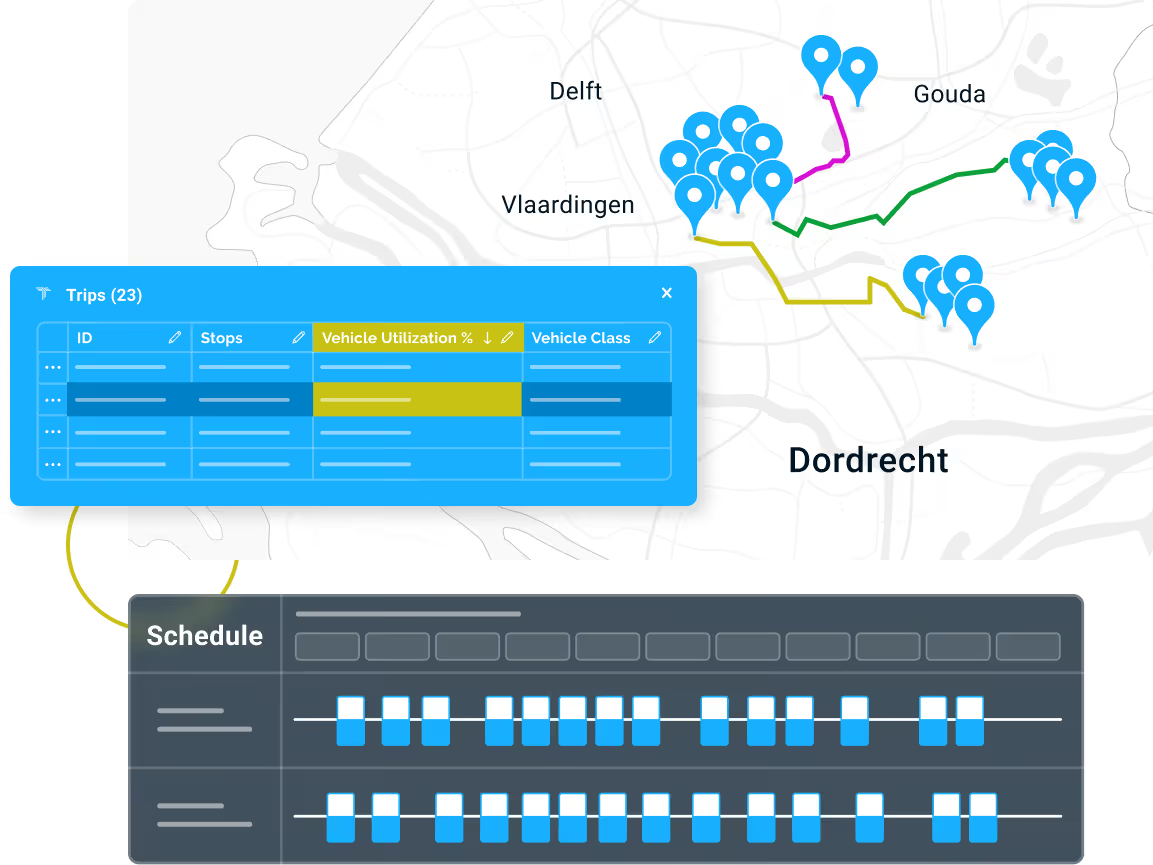
Business-Specific Planning
With specialized route optimization algorithms designed to optimize fleet utilization and create feasible and cost-effective routes quickly, regardless of the complexity of the constraints.

Dynamic Scheduling, Dispatch, & Rescheduling
When the routing schedule is threatened by an unexpected event, reoptimize it with a click of a button. Powered By Chora
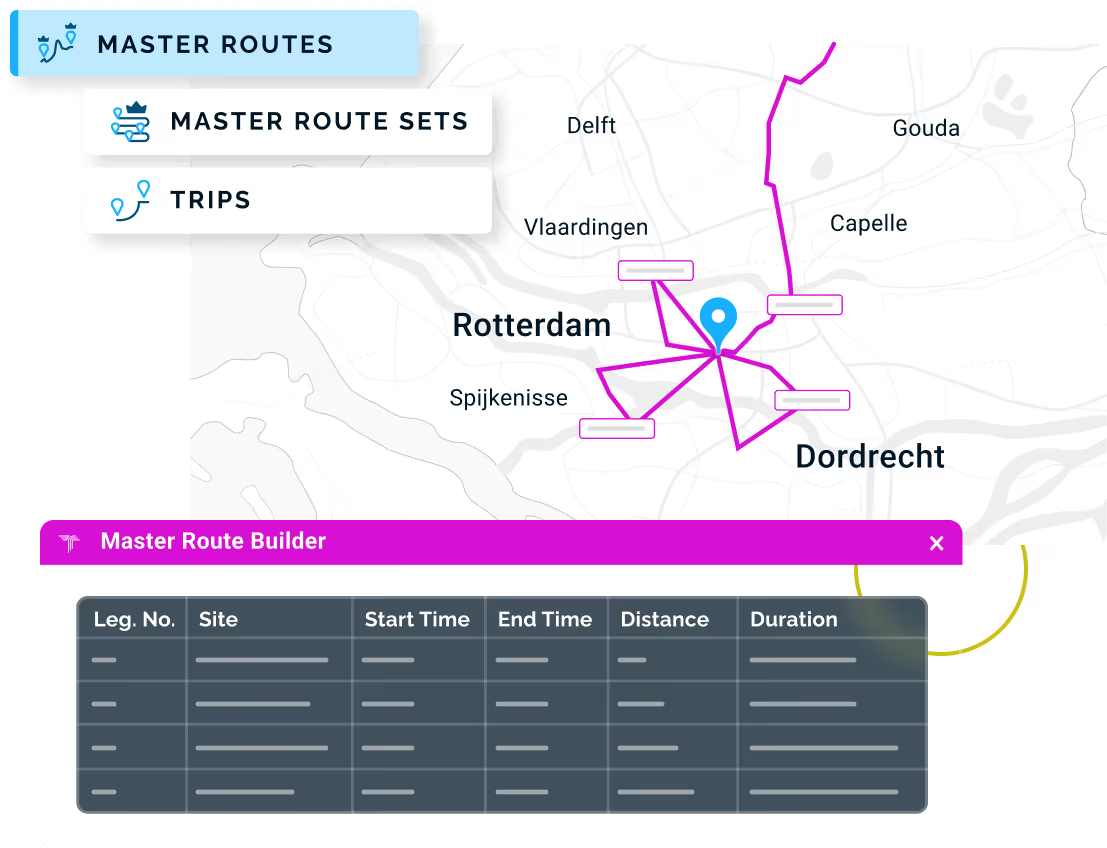
Master Route Planning
Create master routes from optimized schedules, various scenarios or manually. Apply master route templates to your daily planning process.
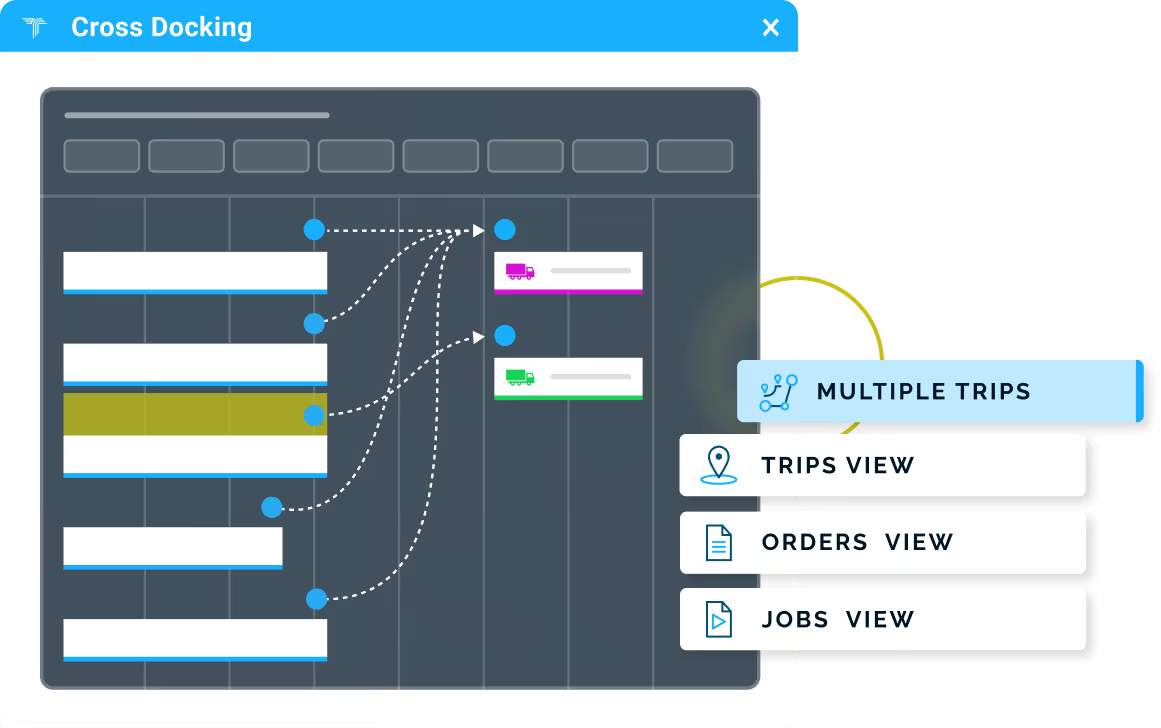
Cross Docking
Easily include cross-docks in your scheduling and route optimization and integrate planning with existing transport and warehouse management systems.
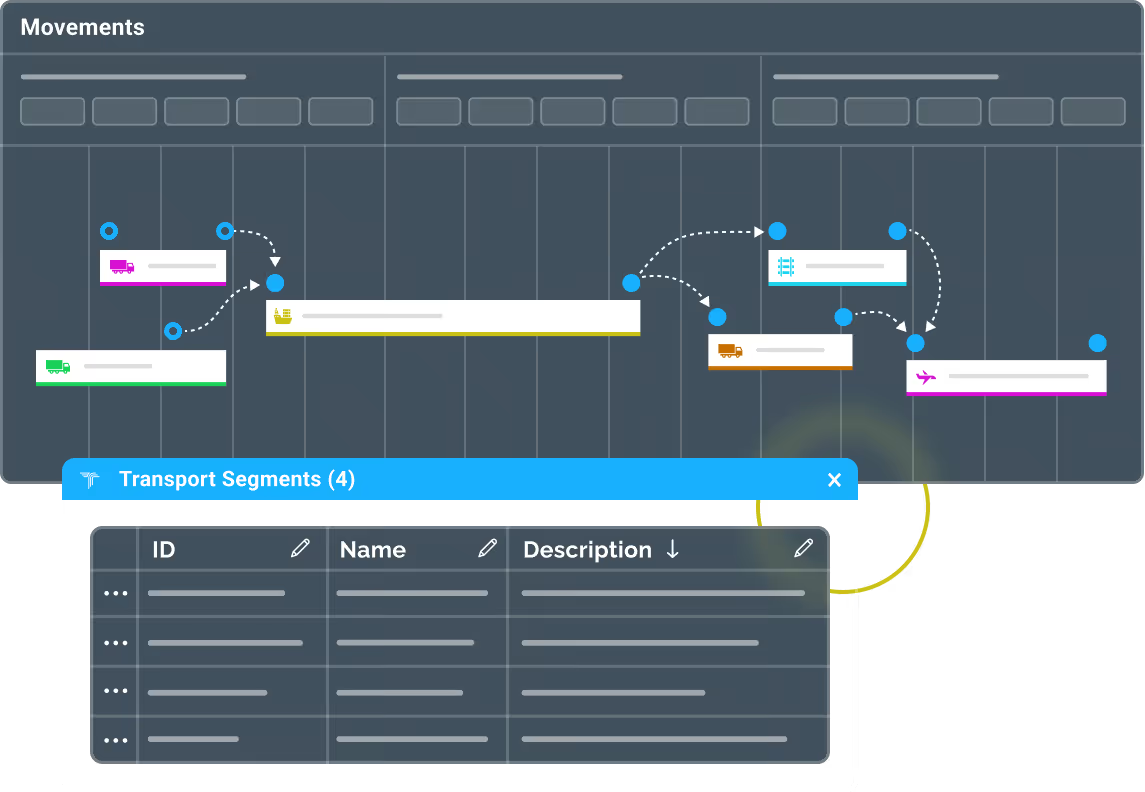
Multimodal Movement Planning
Plan and track multimodal containers through your network, giving visibility of ship, air and rail departures to ensure multi movement operations run smoothly and efficiently.
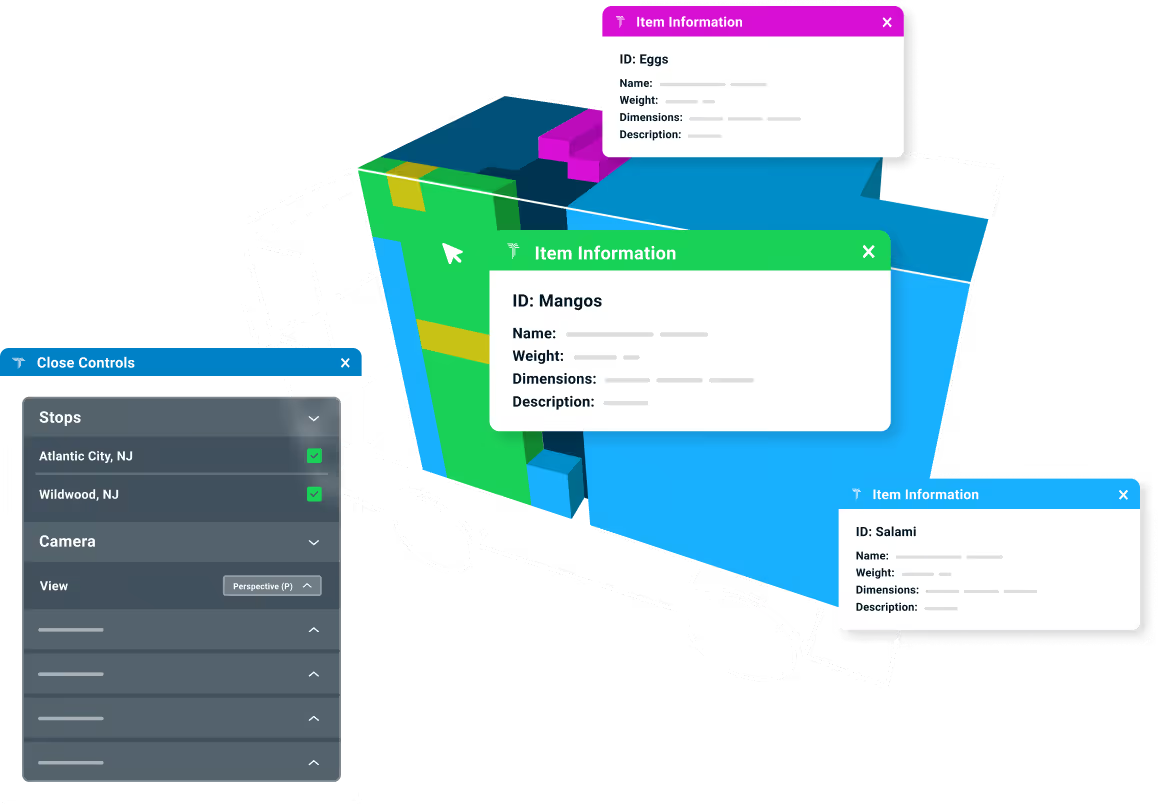
Load Builder
Optimize cargo placement and ensure that every square inch of your truck is utilized efficiently - enabling less trips, faster loading times and less product loss and damage.
Business-Specific Planning
With specialized route optimization algorithms designed to optimize fleet utilization and create feasible and cost-effective routes quickly, regardless of the complexity of the constraints.
Dynamic Scheduling, Dispatch, & Rescheduling
When the routing schedule is threatened by an unexpected event, reoptimize it with a click of a button. Powered By Chora
Master Route Planning
Create master routes from optimized schedules, various scenarios or manually. Apply master route templates to your daily planning process.
Cross Docking
Easily include cross-docks in your scheduling and route optimization and integrate planning with existing transport and warehouse management systems.
Multimodal Movement Planning
Plan and track multimodal containers through your network, giving visibility of ship, air and rail departures to ensure multi movement operations run smoothly and efficiently.
Load Builder
Optimize cargo placement and ensure that every square inch of your truck is utilized efficiently - enabling less trips, faster loading times and less product loss and damage.

Save Time and Money
Reduce fleet and operating costs by 10%-30% on average. Increase your fleet’s productivity while reducing miles, fuel consumption, and maintenance costs, require fewer trucks and drivers as your business grows, and take your planning time down from hours to minutes.

Reduce Carbon Emissions
Prioritize a positive impact on the environment by reducing miles driven and the number of vehicles on the road without sacrificing productivity and business growth. Discover ways to reduce carbon emissions through better planning, scheduling, and route optimization.
Make Better Business Decisions
Leverage Tramm's route planning and optimization strategically to model a variety of scenarios. “What if" scenarios can help you understand your options, like relocating a warehouse or using larger vehicles, and the impacts on cost and service.
Increase Performance with Tools that Keep You in Control
Control every detail of your logistics operations without sacrificing efficiency. That’s the synergistic power of Tramm.
Automate your orders according to custom configurations and give your customers their own portal to manage orders.
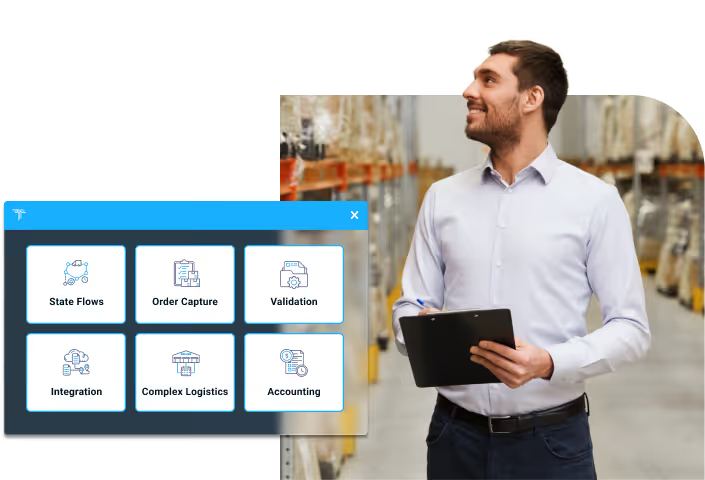
Visualize and plan optimized routes for transportation in different environments–multi-modal, cross-docks, primary and secondary distribution–while easily making real-time adjustments in a dynamic environment.

Manage the entire trip lifecycle, including internal and external transporters, tendering, tariffs, rates, documentation, and invoicing.

Stay in control with planned versus actual execution management, real-time ETAs and tracking, communication, customizable alerts, and performance analytics.
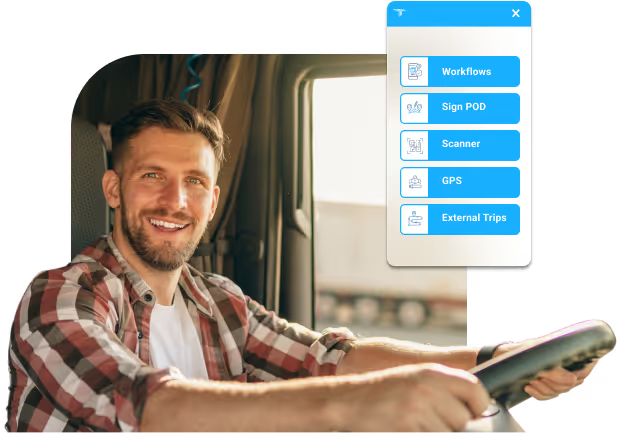
Give drivers on-the-go capabilities, from communication and ePOD submission to creating and performing custom workflows.
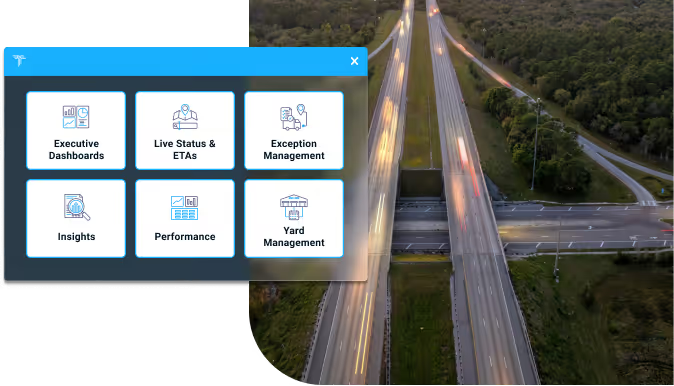
Get at-a-glance insights with comprehensive, customisable dashboards, reports, and performance analytics backed by real-time data.
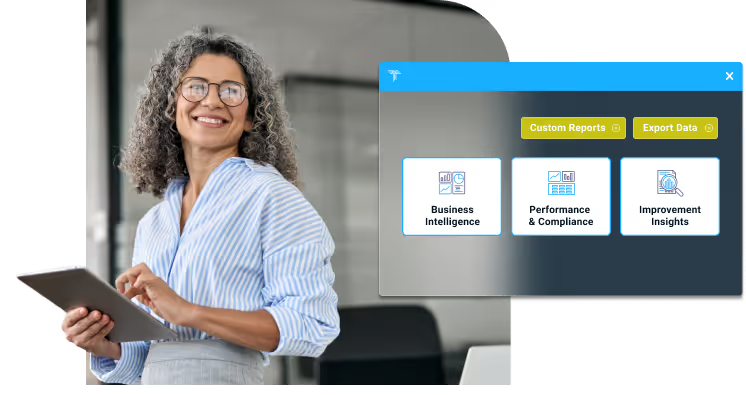
Automate your orders according to custom configurations and give your customers their own portal to manage orders.
Visualize and plan optimized routes for transportation in different environments–multi-modal, cross-docks, primary and secondary distribution–while easily making real-time adjustments in a dynamic environment.
Manage the entire trip lifecycle, including internal and external transporters, tendering, tariffs, rates, documentation, and invoicing.
Stay in control with planned versus actual execution management, real-time ETAs and tracking, communication, customizable alerts, and performance analytics.
Give drivers on-the-go capabilities, from communication and ePOD submission to creating and performing custom workflows.
Get at-a-glance insights with comprehensive, customisable dashboards, reports, and performance analytics backed by real-time data.
Frequently Asked Questions
What is route planning in logistics?
Route planning in logistics is the process of turning a set of orders into an executable set of vehicle trips: deciding which vehicle carries which orders, in what sequence, along which roads, within the time windows the customer has been promised. At small scale a dispatcher does it by hand; past a few vehicles and a few dozen drops the number of workable combinations outgrows human judgement, which is where route optimisation software takes over. Tramm is built for operators at that scale — third-party logistics providers, distributors, manufacturers and in-house fleets — and serves both the planner who wants trips generated automatically and the dispatcher who needs manual control for VIP customers, sensitive cargo and urgent escalations.
How does delivery route optimisation work?
Delivery route optimisation takes a set of unplanned orders and assembles them into the most efficient set of trips, handling vehicle assignment, stop sequencing and routing while minimising distance, time and cost. A usable planner shows the result on a live map alongside utilisation, distance and cost metrics, so the plan can be approved or refined before dispatch rather than taken on trust. In Tramm, planners select their unplanned orders and press Plan; the optimisation engine does the rest.
How does real-time data impact route optimisation?
Real-time data turns route optimisation from a single daily event into a continuous one. New orders arrive, vehicles break down, customers cancel and traffic moves, so a plan built at five in the morning is already wrong by mid-morning. Systems built on a real-time state engine re-optimise as those conditions change and keep every trip, job and stop in step with what is actually happening on the road. Tramm re-optimises on demand throughout the operating day, cascading each change through every affected entity rather than requiring a fresh planning run.
How long does transportation route optimisation take?
It depends almost entirely on the solver. Conventional CPU-based planners take hours to optimise a few hundred orders, which is why many operations plan once overnight and live with the result all day. GPU-based solvers compress that to seconds: Tramm routinely plans hundreds of orders into dozens of trips in a single run, which turns transportation route optimisation from an overnight batch job into something a team can iterate on while the day is running.
What constraints does route optimisation software need to handle?
A plan is only usable if it honours the constraints that actually govern the operation: vehicle capacity by weight and volume, delivery time windows, product compatibility, vehicle-class capability and restrictions, and operator hours and regulations. Route optimisation software that ignores them produces routes that look efficient on screen and fail in execution. Tramm surfaces any breach as a violation before dispatch, rather than leaving it to be discovered after the truck has rolled.
What does GPU-powered route optimisation mean?
Route optimisation is a search problem: the solver explores combinations of orders, vehicles and sequences looking for the cheapest set that satisfies every constraint. A GPU evaluates far more of those possibilities in parallel than a CPU can, so in the same wall-clock time it searches a much larger space and returns a better answer. Chora is Tramm's GPU solver, and that is where both the speed — seconds rather than hours — and the higher route quality come from.
Can planners override automated route optimisation?
They should be able to. Automated route optimisation handles the bulk of a plan well, but VIP customers, sensitive cargo and urgent escalations need human judgement, and a system that forbids manual intervention simply gets worked around in spreadsheets. The practical test is whether manual changes are validated against the same constraints as the automated plan. Tramm's Manual Planner is a full drag-and-drop workspace with map and Gantt views side by side, instant validation as you work, and the Load Builder built in so capacity violations appear before you commit.
How does multi-modal transport optimisation work?
Multi-modal transport optimisation treats a door-to-door journey that hands off between road, rail, sea and air as a single shipment rather than a series of disconnected bookings. Each leg is modelled as a segment of one movement, with every handoff and workflow event logged, so any order can be traced back through the legs that delivered it. In Tramm all four modes are first-class segments within a single movement rather than a module bolted on afterwards.
What is a milk run in logistics route planning?
A milk run is a recurring delivery or collection route that follows the same pattern every cycle — a fixed customer round, a scheduled tour between depots, a regular collection circuit. Because the pattern repeats, planning it from scratch each cycle is wasted effort: in mature logistics route planning the route is designed once and reused as a template, with matching orders populating it automatically. Tramm calls these Master Routes, supports Standard, Stop-Only and Tour templates, and groups them into sets by region, day of week or campaign.
How does cross-docking work in logistics route optimisation?
Cross-docking moves goods from inbound to outbound vehicles at a hub with little or no storage in between, which means both sides of the dock have to be planned as one operation rather than two. The difficulty is capacity and timing: the outbound segment needs room, and the inbound load has to arrive before it departs. Tramm plans both sides on a single screen with real-time capacity checks, a Gantt timeline for dock throughput, integrated loading-bay booking with conflict avoidance, and every transfer logged for audit and claims.
How do optimised transport routes reduce freight cost?
Freight is cheaper per unit on a full vehicle, so the economics turn on finding combinations of orders that fill one and trigger full-truckload rates instead of shipping part-loads. Optimised transport routes do that safely by respecting stackability, fragility, hazmat and temperature rules while the load is being built, not discovering a problem after it is committed. Tramm's Full Load Planner combines 3D load visualisation with consolidation logic, shows live weight and volume utilisation, and enforces those constraints before you commit.
What is left-on-board cargo in logistics?
Left-on-board — LOB — is cargo that did not reach the customer on a trip and is still on the vehicle. It is a common source of silent loss, because if it is not tracked at vehicle and trailer level it simply disappears from the next planning cycle. The practice that prevents that is treating it as a first-class signal which feeds back into planning automatically. Tramm surfaces LOB in the next cycle, feeds it into Planner, Manual Planner, Crossdock and Full Load Planner, and applies configurable rules per operation.
How much can route optimisation reduce fleet costs?
The saving comes from four places at once: higher vehicle utilisation through load building and consolidation, lower cost per kilometre through automated optimisation and reuse of repeatable routes, better on-time delivery through constraint-aware planning, and planning cycles measured in minutes rather than hours. Reductions in the region of 10–30% of fleet cost are commonly cited for well-implemented systems, though the starting point matters more than the software does. Tramm is engineered around exactly those metrics, including recovery of units that would otherwise be lost between legs.
What is the Tramm Planning & Optimization module?
Tramm Planning & Optimization is the part of the Tramm platform where you visualise and plan optimised transport routes across every environment your operation runs — multi-modal networks, cross-docks, and primary and secondary distribution — and then adjust them in real time as the day changes. It brings together seven purpose-built planning apps on one unified data model, so you can move from a fully automated optimisation run to hands-on, drag-and-drop control without ever leaving the module or losing context.
What makes Tramm's approach different from a standard route planner?
Most tools give you either automated optimisation or manual control — Tramm gives you both, on the same live entity model. Every app (Planner, Manual Planner, Multi-modal, Master Routes, Crossdock, Full Load Planner and Left-on-Board) shares one source of truth, and every change ripples in real time through Tramm's state engine. The result is a single planning pipeline rather than a collection of disconnected point tools.
What planning modes does Tramm Planning & Optimization offer?
Three, and you can switch between them without switching apps: Standard (conventional pick-up and delivery planning), Crossdock (hub transshipment planning), and Multi-modal (journeys spanning several transport modes). The same workspace adapts to the operational reality in front of you.
What are the seven apps in Tramm Planning & Optimization?
Planner (automated optimisation), Manual Planner (drag-and-drop control), the Multi-modal app (road/rail/sea/air orchestration), Master Route Builder (repeatable template routes), the Cross Docking app (transshipment hubs), the Full Load Planner (3D load building and consolidation), and Left-on-Board Management (recovery of undelivered cargo). All seven share one live data model, so work flows seamlessly between them.
How does the Planning module fit with the rest of Tramm?
Planning & Optimization is one module on a single platform. Orders captured through Order Management — via API, EDI, portals or manual entry — flow straight into planning, then on to consolidation, execution and reconciliation, all on the same entity model. Planning is the second stage of one continuous pipeline (Capture, Plan, Consolidate, Move, Reconcile), not a separate system you have to integrate.
What is the Tramm Planning & Optimization module built on, and is it secure and enterprise-grade?
The Planning module runs on a modern, reactive, enterprise-grade foundation: an Angular front end, a .NET back end, a GraphQL data pipeline, Tramm's LEE rules engine, and Azure AD single sign-on, with real-time state cascades keeping every entity consistent. It is designed to meet the security, reliability and scale requirements of enterprise logistics operations.
How can I see Tramm Planning & Optimization running on my own data?
Book a demo. In about 45 minutes we will run your real orders through live optimisation so you can see the plans, the utilisation and the savings on your own operation. Contact info@tramm.global to arrange a session.