Fully Integrated Order Management with Customizable State Flows

Direct order capture portal for customers and clients to submit orders directly from within Tramm.

A state machine governing the states of orders and jobs that is fully customizable, allowing you to determine the flow and actions of your order statuses.

Checks and balances to ensure consistency and auditability throughout an order’s life-cycle.
Total Control and Visibility of Your Orders
Order management taking into account both your order management needs and those of your principals.

Customizable State Flows
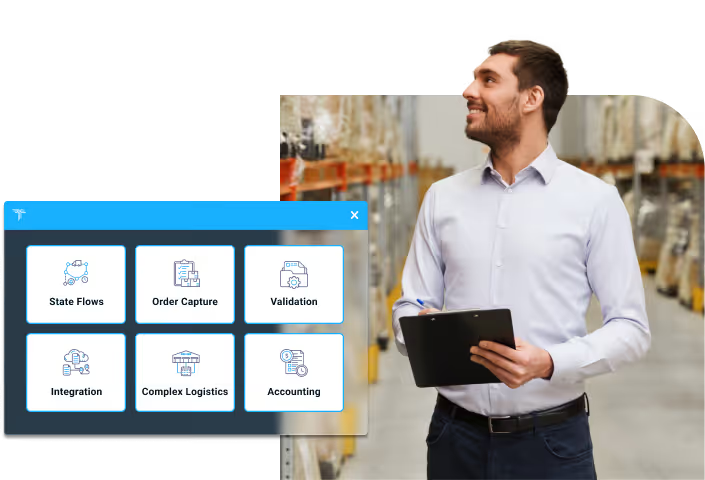
Create state flows that can trigger both internal and external states and actions within warehousing, accounts, picking and more.

Direct Order Capture
Use the customer order capture portal to manage documentation and easily incorporate small-to-medium sized enterprises into your operations.

Consistency and Validity
Through tightly-controlled checks and balances, Tramm validates your orders and ensures correctness from the start of the order lifecycle.
Comprehensive Integration
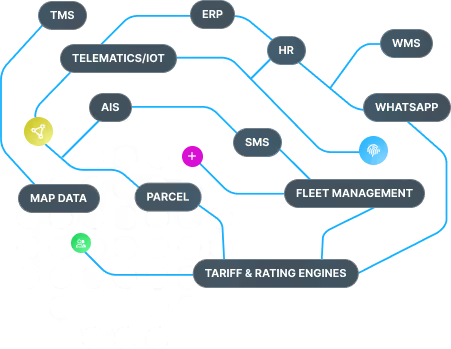
Tramm’s comprehensive API and end points allows you to easily integrate with your partners, clients and principal systems.

Complex Order Logistics
Manage more complex order requirements, such as return orders, multi-leg orders and reverse logistics.

Accounting Accounted For
Generate PODs, invoices and purchase orders which can be integrated directly into your accounting systems.
Customizable State Flows
Create state flows that can trigger both internal and external states and actions within warehousing, accounts, picking and more.
Direct Order Capture
Use the customer order capture portal to manage documentation and easily incorporate small-to-medium sized enterprises into your operations.
Consistency and Validity
Through tightly-controlled checks and balances, Tramm validates your orders and ensures correctness from the start of the order lifecycle.
Comprehensive Integration
Tramm’s comprehensive API and end points allows you to easily integrate with your partners, clients and principal systems.
Complex Order Logistics
Manage more complex order requirements, such as return orders, multi-leg orders and reverse logistics.
Accounting Accounted For
Generate PODs, invoices and purchase orders which can be integrated directly into your accounting systems.

Improve Efficiency
Simplify the order creation, management and execution process by utilising Tramm as the single platform from which all your order information is derived.

Ensure Transparency
A full journal system, history graph, state management and seamless integration with principal systems ensure you always know the what, the when, the how and the who of your orders’ cycle, for auditability and accountability.

Take Control
Whether it’s giving your principal transporters and clients access to detailed information regarding the orders they are responsible for or ensuring your users never have to question the health and status of an order during staging, Tramm has you covered.
Increase Performance with Tools that Keep You in Control
Control every detail of your logistics operations without sacrificing efficiency. That’s the synergistic power of Tramm.
Automate your orders according to custom configurations and give your customers their own portal to manage orders.
Visualize and plan optimized routes for transportation in different environments–multi-modal, cross-docks, primary and secondary distribution–while easily making real-time adjustments in a dynamic environment.

Manage the entire trip lifecycle, including internal and external transporters, tendering, tariffs, rates, documentation, and invoicing.

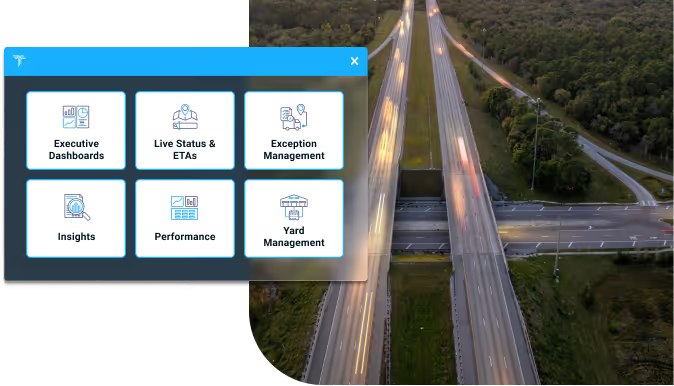
Stay in control with planned versus actual execution management, real-time ETAs and tracking, communication, customizable alerts, and performance analytics.
Give drivers on-the-go capabilities, from communication and ePOD submission to creating and performing custom workflows.

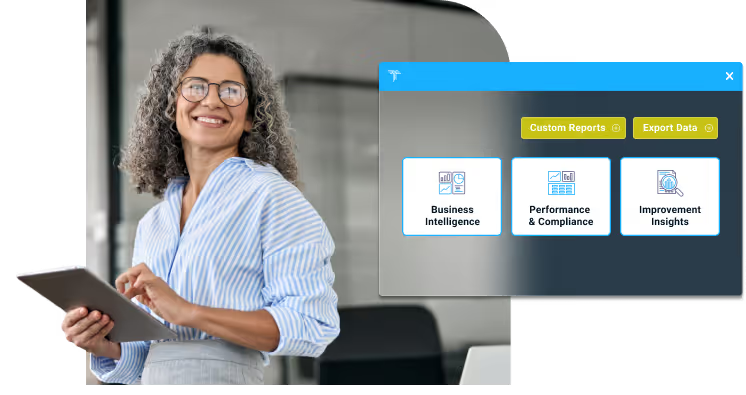
Get at-a-glance insights with comprehensive, customisable dashboards, reports, and performance analytics backed by real-time data.
Automate your orders according to custom configurations and give your customers their own portal to manage orders.
Visualize and plan optimized routes for transportation in different environments–multi-modal, cross-docks, primary and secondary distribution–while easily making real-time adjustments in a dynamic environment.
Manage the entire trip lifecycle, including internal and external transporters, tendering, tariffs, rates, documentation, and invoicing.
Stay in control with planned versus actual execution management, real-time ETAs and tracking, communication, customizable alerts, and performance analytics.
Give drivers on-the-go capabilities, from communication and ePOD submission to creating and performing custom workflows.
Get at-a-glance insights with comprehensive, customisable dashboards, reports, and performance analytics backed by real-time data.
Frequently Asked Questions
What is Tramm Order Management?
Order Management is the capture and demand layer of the Tramm Transport Management System. It is where a customer's requirement — what to deliver, collect, or service, where, and when — becomes a live, structured record that drives everything downstream. Every order enters a single pipeline (Capture, Plan, Consolidate, Move, Reconcile) and stays connected to the plan, the trip, and the invoice it produces. You automate order handling against your own business rules, and you can give customers their own portal to place and track orders.
Who is Tramm Order Management for?
Tramm Order Management is built for 3PLs and 4PLs, retailers, manufacturers, and carriers running high-volume, multi-fleet operations across first, middle, and last mile. If your orders arrive from many sources and in many shapes — EDI from one customer, a spreadsheet from another, a portal booking from a third — Order Management is designed to normalise all of them into one consistent model your planners and systems can trust.
How does Order Management fit into the wider Tramm platform?
Tramm is one unified platform on a single live entity model — one source of truth. An order is a first-class entity that flows naturally into Jobs, Trips, Stops, and Activities as it is planned and executed, with real-time state cascades keeping every connected record in step. Because there is no hand-off between separate systems, an order captured today is the same record your planning, execution, and finance teams act on tomorrow.
What order types and shapes does Tramm support?
Orders can be deliveries (goods brought from an auxiliary site to a primary site), collections (goods picked up from a primary site), or services rendered at a site with no goods movement. Each order carries line items, time windows, an origin and destination, special requirements, attributes, and free-text instructions. Order dimensions are calculated automatically by aggregating line-item sizes, so capacity and planning constraints stay accurate without manual re-keying.
Can Tramm Order Management route orders down different fulfilment paths?
Yes. Tramm recognises several order kinds so the right ones take the right route: Standard orders flow through normal planning, Crossdock orders are consolidated and moved hub-to-hub, Movement orders run through the multi-modal movement pipeline, and Route orders are generated from master-route schedules and pre-assigned to recurring trips. One module handles simple point-to-point work and complex multi-leg logistics without switching tools.
How does Tramm enforce lead times and customer cut-off windows?
You configure lead-time rules by origin, destination, region, distance, client, or custom condition, and Tramm calculates the required deadlines — respecting working days, public-holiday calendars, site operating hours, and cut-off times. Client cut-off schedules define the windows in which orders are accepted; an order that misses its window is automatically held back from planning rather than slipping through. This turns your service commitments into rules the system applies on every order, consistently.
Can customers place and manage their own orders in Tramm Order Management?
Yes. The Client Portal and Booking Portal let your customers capture orders, see status, and track deliveries in self-service, within the limits and validation you define. Orders they place land directly in the same pipeline as every other channel — no re-entry, no email chasing. This reduces inbound workload for your team while giving customers the visibility they increasingly expect.
What optional credit control does Tramm Order Management offer on orders?
For organisations that enable it, Tramm can run a credit check as orders are captured or changed: it recalculates client tariffs, evaluates the order against the client's credit limit and outstanding balance, and either approves the order or flags it as credit-blocked. Blocked orders are held out of planning until cleared, and planners receive clear warnings when a client approaches a configured threshold. This protects revenue without adding a manual approval bottleneck.
How do orders get into Tramm?
Orders arrive via API, EDI, customer and transporter portals, or manual entry — and through spreadsheet import for bulk loads. Whatever the channel, each order is validated and normalised into the same structured entity, so downstream planning and reporting never has to care where an order came from. This is the Capture stage of the pipeline.
What happens to an order after Tramm Order Management captures it?
A captured order becomes the demand signal for planning. Tramm turns it into one or more Jobs that take resource constraints into account — splitting oversized orders, handling multi-visit services, and preserving a trace back to the originating order on every line item. Jobs are then scheduled onto Trips with sequenced Stops and Activities, so there is a clean, auditable line from customer requirement to the vehicle that fulfils it.
How does order consolidation work in Tramm Order Management?
Tramm can group multiple orders or jobs that share an origin-destination pair into a single consolidated job, merging line items and intersecting or inheriting time windows as configured. For crossdock flows it filters out orders eligible for direct single-leg delivery, builds movements and jobs per transport segment, and pulls compatible orders together across hubs. The result is fewer, fuller trips — better utilisation without manual load-building.
What is the order lifecycle in Tramm Order Management, and how is it kept accurate?
An order moves through a clear lifecycle — new, in-planning, in-progress, completed — or new to cancelled, with completion driven by all of its jobs reaching a terminal state. State changes run only through governed state machines, and real-time cascades keep the order in step with its jobs and trips automatically. State flows are configurable per partition, so you can add your own states and drive app behaviour from them to match your process.
How is planning optimised once Tramm Order Management has captured orders?
Order Management feeds Tramm's planning and scheduling engine, with optimisation Powered by Chora — a GPU-accelerated solver built to solve complex transport planning problems in seconds, not hours. Because orders, resources, requirements, and constraints all live on one entity model, the solver works from a single accurate picture of demand and supply. Better input data means better, faster plans.
How does Order Management connect to billing and finance?
Orders flow through to Tramm's financial layer, where tariffs, client payment requests, and invoices are calculated from the same records that were planned and executed. Optional credit management ties client credit status directly to whether an order can be planned. Because there is no separate re-keying between operations and finance, what you quoted, moved, and billed all reconcile against one source of truth — the Reconcile stage of the pipeline.
Can Order Management adapt to our rules and external systems?
Yes. Tramm runs on the LEE rules engine with an extension and hook system, so business rules, validations, and integrations can be configured and extended rather than hard-coded. It integrates with external systems over a GraphQL data pipeline and standard APIs and EDI, is built on Angular and .NET, and uses Azure AD single sign-on. Customers have had bespoke order channels and middleware (for example EDI and partner integrations) fitted into the same pipeline.
What does Order Management actually improve for us?
You capture every order once, from any channel, into one trusted record — cutting re-keying, lost orders, and reconciliation errors. Automated lead-time, cut-off, and credit rules mean fewer orders slip through that should not have, and planners spend less time cleaning data and more time planning. Consolidation and optimisation drive fuller trips and lower cost per order.
How does Tramm Order Management improve customer service?
Self-service portals give customers a direct, validated way to place and track orders, which reduces phone and email traffic for your team. Because orders stay live and connected end to end, the status a customer sees reflects what is really happening on the road. The platform's own promise is no gaps in managing transport, with real-time, precise information.
Does Tramm Order Management scale with high order volumes?
Yes. The module is designed for high-volume, multi-fleet operations, with bulk capture via API, EDI, and import, automated rule-driven processing, and GPU-accelerated optimisation to keep planning fast as volumes grow. Partitioning lets independent departments or tenants operate on the same instance with isolated data. The single entity model means scale does not come at the cost of consistency.
How do we get started with Tramm Order Management?
Most customers begin by mapping their current order channels and business rules — capture sources, order types, lead times, cut-offs, and any credit or consolidation policies — then configuring Tramm to match. Because Order Management is part of one platform, you can start with order capture and expand into planning, execution, and finance on the same model, at your own pace.
How can we see Tramm Order Management in action?
The best way to understand the fit is a tailored demo using scenarios close to your own operation. To arrange one, contact info@tramm.global and we will set up a walkthrough of order capture, automated rules, consolidation, and the flow through to planning and billing.